
Relational Hygiene: The Care We Don’t Talk About Enough

There’s a concept I’ve been turning over in my mind lately: relational hygiene.
Most of us understand physical hygiene without needing it explained. We know what it feels like to be clean, and we can sense when that care has been neglected. It affects how we move through the world—how comfortable we feel in our own skin, and how easily we can exist among others. But physical hygiene is just one layer.
We also tend to our mental hygiene through therapy, mindfulness, or the quiet act of noticing our thoughts. We care for our emotional hygiene when we allow ourselves to feel—fully and honestly—without letting those feelings consume or define us. We explore spiritual hygiene when we seek creative expression and connection to something larger than ourselves. And yet, there’s something we talk about far less often: the way we care for our relational selves.
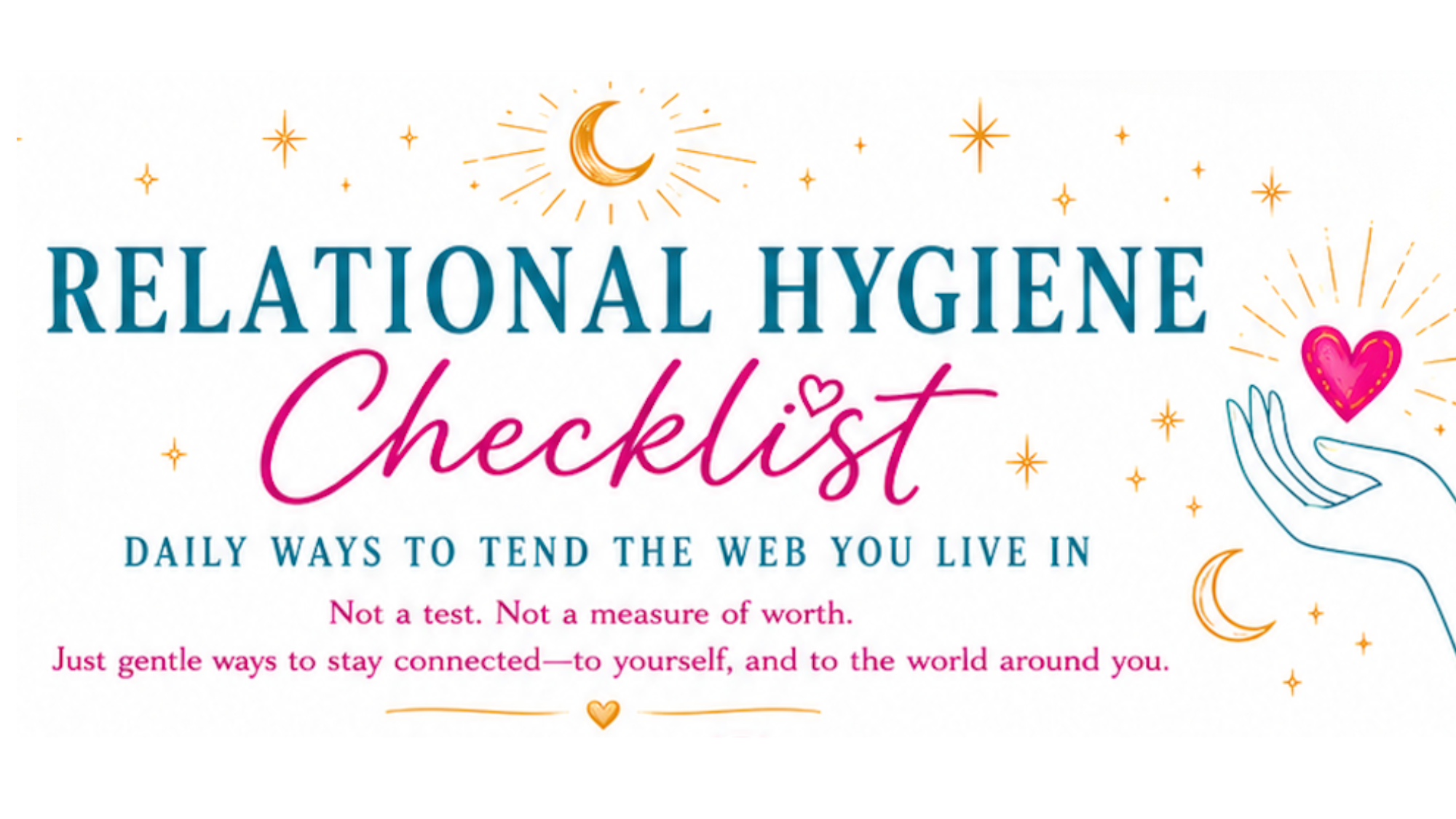
Relational hygiene is the ongoing, everyday tending of our need for relationship. It’s easy to overlook because this need doesn’t always feel urgent—until it does.
I’ve noticed this most clearly in moments when I’ve spent time with people who, for one reason or another, live more solitary lives. Sometimes that solitude is chosen. Sometimes it’s circumstantial. But over time, something natural happens: the human need for connection doesn’t disappear—it accumulates. And when connection finally arrives, it can come out all at once. Not because there’s anything “wrong,” but because there’s been a deficit.
In those moments, the need for closeness can feel intense—like trying to make up for lost time in a single interaction. And while that desire is deeply human, it can sometimes feel overwhelming for the other person, especially if they’ve been tending to their own relational needs more steadily over time. This is where the idea of relational hygiene becomes so important.
Just like we don’t wait a week to shower and then expect one long scrub to carry us forward, connection works best when it’s tended to regularly, in small, sustainable ways. Relational hygiene doesn’t have to be grand or profound. In fact, it’s often built through the simplest moments.
It might look like choosing to go to the grocery store instead of placing a delivery order. Making eye contact with the cashier. Asking someone their name. Sharing a brief, genuine exchange with the barista who makes your coffee. These small interactions matter more than we give them credit for. They are tiny threads of connection that, over time, weave a sense of belonging. They help regulate our nervous system. They remind us that we are part of a shared human experience.
Of course, there are times when we need deeper support. Therapy, coaching, energy healing, and other intentional healing spaces can be powerful ways to experience sustained, meaningful connection—and there’s something beautiful about receiving care from someone who has chosen that work as their calling. But even then, the responsibility for our relational well-being doesn’t disappear.
Hygiene—of any kind—is ultimately something we each have to tend to ourselves. We can ask for help. We can invest in support. We can lean on others when we need to. But it is also our great responsibility and privilege to participate in the ongoing care of our own lives.
Relational hygiene invites us to take gentle ownership of our need for connection—not from a place of blame, but from a place of empowerment. Because when we begin to tend to it regularly, we no longer have to arrive in connection feeling depleted, overwhelmed, or behind. Instead, we meet each other in a more balanced, mutual way.
And from that place, connection becomes not something we’re scrambling to receive, but something we’re able to truly share.
If you’re noticing patterns in how you give and receive connection, this is exactly the kind of story we explore in spell work sessions—where the patterns shaping your relationships become visible, and something new can be intentionally cast.